
Owners of high-end cars routinely entrust their vehicle to a friend, a family member, a private chauffeur, a concierge service or a specialised rental company. In a world where families move between several countries and premium lifestyle services are increasingly common, these arrangements have become almost routine. Yet one question remains: who is actually liable if an accident occurs while the car is being lent or rented out?
Misdeclared usage, differences in national regulations, reliance on underinsured third parties and contract terms that do not match the vehicle’s real-life use can all lead to expensive claims — sometimes far beyond what the owner expects. A poorly calibrated insurance policy may even expose the owner’s personal assets.
This article clarifies real liabilities, highlights common pitfalls and outlines the solutions most appropriate for owners of high-value vehicles. It is a subject in which IFO Global’s international expertise brings genuine peace of mind.

This is not accurate.
Insurance generally covers a vehicle, but only under the conditions set out in the contract:
If the vehicle is used in a manner not compliant with the policy, insurers will still compensate third-party victims — this is a strong protection in many jurisdictions — but they may later seek reimbursement from the policyholder or driver if a contractual exclusion applies.
The financial exposure can therefore be significant, even when victims are fully compensated.
Any of these can trigger recourse from the insurer.

The owner remains civilly liable for the vehicle, but the insurer must fully compensate third-party victims, even if the driver was not authorised.
The insurer may then pursue a limited recourse action if the policy terms were breached.
The most frequent exclusions include:
Similar structure to France, but with stricter requirements and higher minimum limits. Post-claim investigations are particularly rigorous, especially for high-value vehicles.
The system distinguishes between:
A non-named driver is usually not covered.
Policies are strict regarding:
In serious accidents, the owner may be required to prove explicit authorisation for the driver.
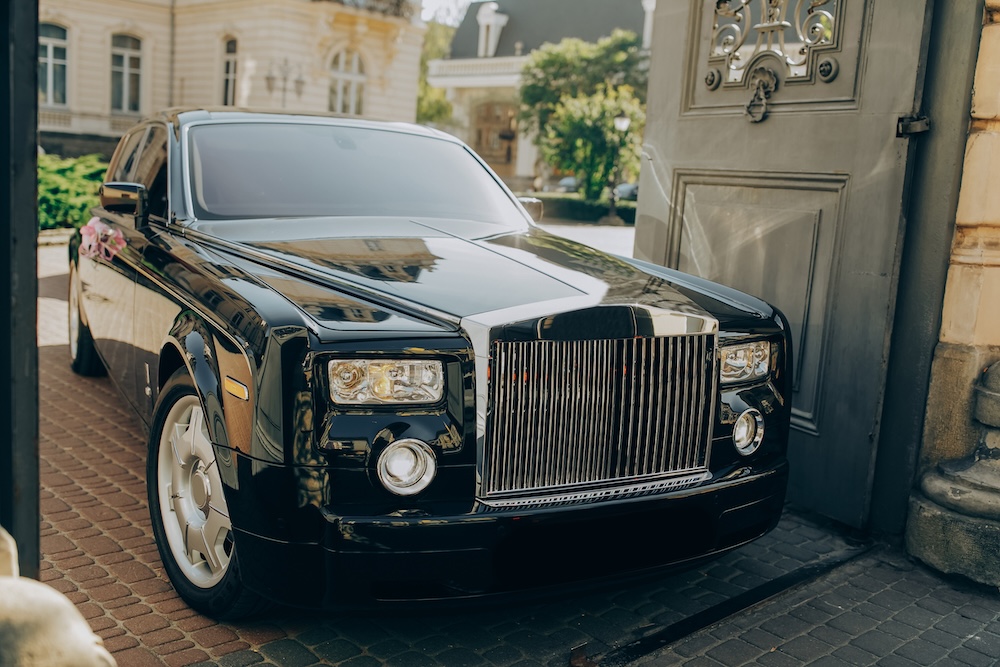
If a friend drives the car and causes an accident, third parties are still compensated, even if that driver was not declared. The risk lies in the insurer’s right of recourse if an exclusion applies (e.g. age limitation, undeclared usage, recent licensing).
Recourse amounts vary but can be significant depending on the severity and the policy wording. Where bodily injury is involved, the exposure can be substantial if the policy had a major exclusion.
A salaried chauffeur must be declared as a professional driver.
A freelance chauffeur must carry their own professional insurance.
Most chauffeur-related issues arise from a simple problem:
the owner’s personal insurance does not allow professional driving.
Concierge services often appear impeccable, yet their insurance may not cover:
IFO Global frequently encounters cases where a concierge service believed they were properly insured, but the liability still fell back onto the owner.
Renting a vehicle, even occasionally, becomes a commercial use.
If the rental agency lacks the correct professional insurance, the owner’s personal policy will not respond. Serious claims in such scenarios often lead to complex contractual disputes.
Many policies only cover:
A relative who obtained their licence recently may fall outside the criteria.
These vary widely:
These may include:
High-performance cars are naturally exposed to such exclusions.
Material damage on a luxury vehicle can range from €20,000 to €150,000 or more.
Bodily injury claims, depending on the jurisdiction, may exceed several million euros, considering:
Even when the insurer compensates victims, a recourse action may still place the owner in financial difficulty if the policy was not adapted.

Every regular driver must be explicitly declared:
Usage must also be declared: private, professional, representation, occasional rental, etc.
For conciergeries, chauffeurs or rental agencies, insurance must be:
IFO Global routinely audits third-party insurance policies before any handover.
A vehicle used in France, Monaco and Dubai does not face the same risks as one strictly used in a single jurisdiction.
Local regulations require precise adjustments.
This facilitates:
Some premium insurers offer broader coverage, suitable for families or owners with multiple potential drivers.
These must be evaluated carefully according to real usage.
IFO Global is frequently consulted for scenarios involving:
We provide:
Confidentiality remains central: no information is shared without explicit consent.
For owners of Ferrari, Bentley, Aston Martin, Rolls Royce, McLaren or Porsche vehicles, insurance is not merely a document — it is a strategic layer of protection.
It requires an international, coherent, rigorous and confidential approach.
IFO Global can conduct a discreet audit of your current insurance arrangements, analyse your real usage patterns and propose coverage that is genuinely adapted, without unnecessary costs and without blind spots.