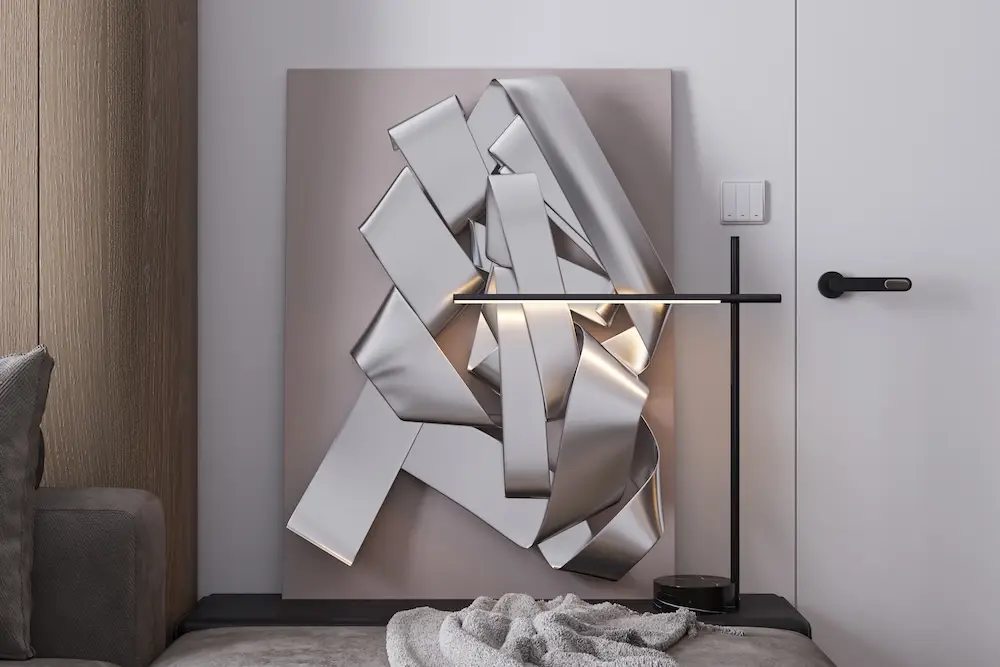
Renting out a luxury residence — whether a Mediterranean villa, a London penthouse, an Alpine chalet, or a secondary home abroad — has become increasingly common among HNWI and internationally mobile families. Yet one element is often overlooked: the artworks displayed in these homes. Paintings, sculptures, rare photographs, contemporary installations… many of these pieces are insured for hundreds of thousands, sometimes millions, of euros.
A single mishap can turn an ordinary rental period into a costly ordeal.
Who pays if a tenant breaks a Murano glass sculpture? If a child knocks over an oil painting? If humidity damages a limited-edition photographic print? The tenant? The homeowner’s insurance? A dedicated fine art policy? Or… no one?
This question — common among sophisticated property owners, expatriates, and art collectors — has no universal answer. It depends on:
• the legal framework of the country
• the insurance policies in place
• the nature of the damage
• the rental agreement
• the owner’s personal structure (residency, holding, trust, etc.)
• the artwork’s updated market value
A misunderstanding can result in significant financial loss. According to a 2024 Fine Art Group study, one in five art-related damages in luxury homes occurs during rental periods, while 72% of art collections are improperly insured when a property is rented out.
So… who actually pays? And how can one ensure proper protection?
For insurers, this distinction is fundamental.
Common accidental damages in luxury rentals include:
• artworks knocked over during furniture moves
• liquid spills (wine, champagne, essential oils)
• humidity damage due to poor climate control
• accidental impacts during unauthorized professional shoots
• damage caused by children or pets
Recent studies from Hiscox and AXA Art report that more than 35% of rental-related art claims involve artworks falling from walls or shelves.
Intentional damage, however, triggers entirely different legal and insurance considerations — often lengthier, more complex, and with a significantly higher risk of denial.
High-end homes have unique architectural and operational risks:
• large window façades exposing works to strong UV
• fluctuating humidity levels due to overused AC systems
• housekeeping staff untrained in art handling
• artworks moved several times between rental check-ins
• improvised storage for sensitive pieces
Between two tenants, a piece may be handled five to ten times — every manipulation increasing the risk of damage.
Most owners assume their high-value home insurance covers their art.
In reality, most standard home policies exclude damages occurring during short-term rentals.
Common exclusions include:
• property used for holiday rentals
• damage caused by third parties not named in the contract
• manipulation of artworks during tenant turnover
• professional photoshoots or events held inside the residence
For HNWI property owners, this creates a considerable blind spot.
In most countries (France, Italy, Spain, Portugal, UAE, UK), tenants are required to carry liability insurance.
However:
Most tenant liability coverage does NOT apply to high-value artworks.
Why?
• Coverage limits are usually extremely low (often €15,000 to €50,000).
• Fine art is frequently excluded by default.
• Items of exceptional value, rarity, or fragility require special endorsement.
A painting worth €450,000?
A rare photograph valued at €80,000?
A contemporary sculpture sold for €300,000?
They are never covered by standard tenant liability insurance.
Some high-value home policies (common in the UK, US, Switzerland) may cover art under the “general contents” category.
But the limitations are significant:
• limits far below the value of HNWI collections (€100,000–€500,000)
• mandatory updated valuations
• exclusions for short-term rentals (Airbnb, agencies, concierge services)
This is the optimal scenario.
A fine art insurance policy with a specific extension for rental periods covers:
• manipulation by third parties
• accidental damage
• storage during tenant stays
• negligence
• damage from climate variations
• supervised handling by housekeeping or concierge staff
However, this extension is not included by default. It must be added.
According to Art Media Agency (2023), 48% of HNWI collectors are unaware that their fine art policy excludes damages during short-term rentals.
This occurs when:
• the home insurance excludes rental activity
• the fine art insurance excludes third-party handling
• the tenant’s liability coverage is insufficient
Result:
the owner pays 100% of the cost, including restoration and loss of value.
Restoration alone can reach €50,000.
Loss of market value (“diminution in value”) can reach several hundred thousand euros.
Even after expert restoration, an artwork often loses 10–40% of its market value.
Most home insurance policies do not cover this.
A work purchased for €120,000 may be worth €400,000 ten years later.
If insurance coverage was never updated, the claim will be based on the old valuation — a catastrophic scenario for dynamic artists with rapidly rising market prices.
Without a professional photographic condition report, insurers may dispute the origin or date of the damage.
IFO Global encounters this frequently in luxury villas in Saint-Tropez, Ibiza, and Mykonos.
Concierge companies often tell owners:
“Don’t worry, everything is insured.”
In reality, the homeowner’s policy may explicitly exclude seasonal or short-term rentals.
This discrepancy is the source of many high-value disputes.
This is mandatory and ensures policy validity.
Two distinct policies = stronger coverage and fewer exclusions.
Insurers typically require:
• expert appraisal
• high-resolution photographs
• provenance documentation
Absolutely essential when the property is:
• listed for holiday rentals
• loaned to guests
• managed by luxury concierge services
• used for events or photoshoots
Handling incidents represent 41% of art damages (Art Loss Register, 2024).
Many owners store their most fragile or valuable works during rental periods.
IFO Global supports clients with properties in multiple jurisdictions:
• UAE villas
• London townhouses
• Swiss chalets
• US ranch properties
• Mediterranean second homes
Each jurisdiction has its own legal and insurance rules.
Our role: harmonize protection across all locations.
Clients appreciate having one expert coordinating:
• high-value home insurance
• fine art insurance
• rental and loan extensions
• international coverage for multiple properties
This eliminates gaps in coverage.
If damage occurs, IFO Global coordinates:
• the appointment of certified experts
• communication with the insurer
• restoration supervision
• protection of resale or succession value
For HNWI/VHNWI/UHNWI individuals, confidentiality is not optional — it is non-negotiable.
All documentation, communication, and interventions follow strict protocols.
Value: €320,000
Cause: staff moving furniture before guests’ arrival
Outcome:
• tenant liability: not applicable
• home insurance: excluded
• fine art policy: full coverage
• loss of value: covered
Value: €110,000
Cause: air-conditioning malfunction during rental period
Outcome:
• home insurance: insufficient limits
• fine art policy: restoration + loss of value covered
• loss of value: –25%
Value: €75,000
Cause: private event linked to rental
Outcome:
• tenant liability: €15,000 limit
• fine art insurance: covered the remainder
• loss of value: not covered
(80% of owners are unaware that loss of value is not automatically included.)
• include a specific “artwork clause” in rental agreements
• require reinforced tenant liability insurance (€50,000–€150,000 minimum)
• obtain a professional condition report before each rental
• provide a list of artworks and updated valuations
• inform agencies/concierges about non-movable pieces
• store highly sensitive or irreplaceable works in advance
Artworks are not decorative objects — they represent emotional, cultural, and financial capital. When displayed in a rented property, their exposure to risk increases significantly. And in most cases, owners assume they are covered… when their insurance policies contain critical exclusions.
The good news: with the right structure, expertise, and a unified approach, these risks can be fully controlled. The proper combination of policies, updated valuations, and international oversight eliminates most grey areas.
For owners with multiple residences across different countries, working with an expert advisor ensures not only peace of mind but also long-term protection of the artwork’s financial and heritage value.
If you would like to assess the strength of your current coverage or ensure optimal protection for the artworks in your rental properties, IFO Global can assist you discreetly, with a single point of contact for all your international risks.