When discussing home insurance for a high-end property, attention almost always focuses on the main building: the house itself, outbuildings, artworks, furniture, or security systems.
Yet in luxury residences, a significant portion of the property’s value is located… outdoors.
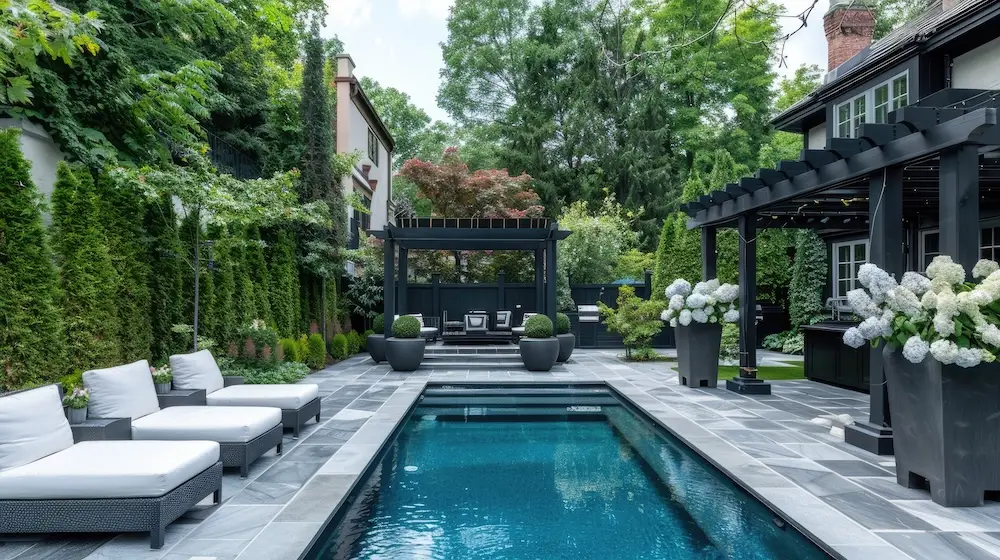
A heated swimming pool, a fully equipped pool house, an outdoor kitchen, garden sculptures, high-end outdoor furniture, architectural lighting systems or sophisticated irrigation networks can represent investments of several hundred thousand euros.
This raises an essential question:
Does your home insurance actually cover these outdoor features?
In many cases, the answer is more nuanced than property owners expect.
A large number of these installations fall into what insurers often consider contractual grey areas: poorly declared, undervalued, or simply excluded from standard guarantees.
For owners of luxury properties — whether a primary residence, a secondary home, or an international estate — understanding these subtleties is crucial.
In a traditional home insurance policy, coverage is typically structured around three main categories:
• the building
• the contents
• personal liability
However, outdoor installations do not always clearly fit into these categories.
Some insurers classify them as “external improvements and fixed outdoor installations”, while others treat them as open outbuildings or simply as garden furniture.
As a result, levels of protection can vary significantly from one contract to another.
Industry analyses across Europe show that coverage dedicated to outdoor installations in standard policies is often limited to between €5,000 and €20,000, which is far from sufficient for luxury properties.
In high-end residences, it is not uncommon for:
• a swimming pool to cost €60,000 to €150,000
• a fully equipped pool house to exceed €100,000
• a landscaped garden project to reach €200,000 or more
Without a specific declaration in the policy, these investments may therefore end up partially — or even completely — uninsured.
Swimming pools represent one of the most significant investments in the outdoor areas of a property.
However, their coverage largely depends on how they are declared in the insurance contract.
An in-ground pool may be classified as:
• an extension of the building
• an outdoor installation
• a specific structure requiring dedicated declaration
Depending on the policy, coverage may include:
• damage caused by storms
• frost
• natural disasters
• vandalism
But some elements are often limited or excluded, such as:
• the liner
• pumps and filtration systems
• pool enclosures
• robotic cleaners and mobile equipment
Another frequently overlooked aspect concerns liability related to swimming pools.
In France, safety devices have been mandatory since 2004 (barriers, covers, alarms or enclosures), and compliance with these regulations can affect compensation in the event of an accident.
For property owners with residences in multiple countries, the situation can become even more complex, as safety regulations differ significantly from one jurisdiction to another.
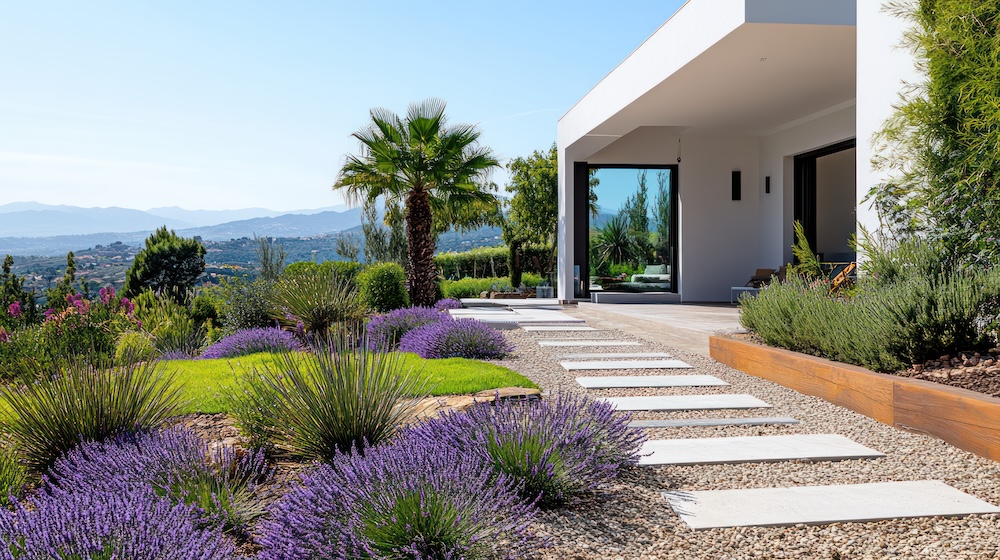
A garden designed by a landscape architect often represents years of planning and substantial financial investment.
Imported mature trees, sculpted vegetation, automated irrigation systems, and architectural lighting can turn a garden into a true asset.
Yet home insurance policies rarely cover the real value of a landscaped garden.
In many European contracts:
• plants are only covered in the event of officially declared natural disasters
• indemnity limits remain very low
• certain rare plant species may even be excluded
A concrete example: replacing a century-old olive tree or a mature imported palm tree can cost tens of thousands of euros.
Without a dedicated extension in the policy, compensation may be minimal.
Some premium insurance policies offer specific guarantees for gardens, including:
• tree replanting
• landscape restoration
• irrigation system repairs
However, these protections usually need to be custom-structured within the policy.
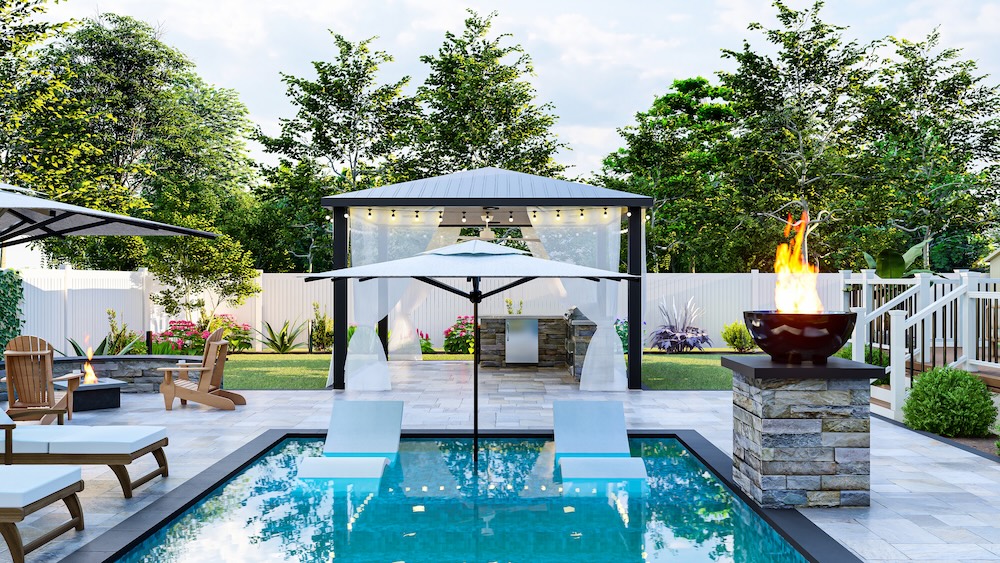
In luxury properties, outdoor structures now go far beyond a simple garden shed.
Many estates feature genuine outdoor living spaces, such as:
• fully equipped pool houses
• outdoor kitchens
• covered outdoor lounges
• outdoor fitness areas
• reception pavilions
These structures may include:
• high-end appliances
• integrated audio systems
• designer furniture
• complex electrical installations
The challenge is that some insurance policies do not automatically treat these structures as insured buildings.
If the structure has not been explicitly declared, it may be classified as:
• an undeclared secondary structure
• an uncovered outdoor installation
• garden furniture
In the event of a major loss, such as a storm or fire, compensation may therefore be limited or even refused if the structure has not been properly included in the policy.
Outdoor living spaces increasingly feature objects whose value can rival that of indoor furnishings.
Examples include:
• designer garden furniture
• sculptures installed in the park or garden
• contemporary outdoor artworks
• architectural lighting systems
• professional-grade outdoor kitchens
However, most home insurance policies apply specific conditions to property kept outdoors.
In many contracts:
• outdoor items are covered only in the event of forced-entry theft
• vandalism may not be covered
• compensation limits are very low
For premium outdoor furniture — sometimes worth €30,000 to €80,000 or more — these limitations can become a real issue.
Some specialized insurance policies allow individual declaration of certain outdoor objects, particularly works of art.
Large residential estates often present characteristics that make their insurance coverage more complex.
Among the most common risks:
• severe storms and extreme weather events
• localized flooding
• landslides
• vandalism affecting outdoor installations
• theft from gardens or outbuildings
According to the French Insurance Federation, weather-related events are now among the leading causes of home insurance claims in France, with risks intensifying due to climate change.
Outdoor installations are often the first elements affected by these events.
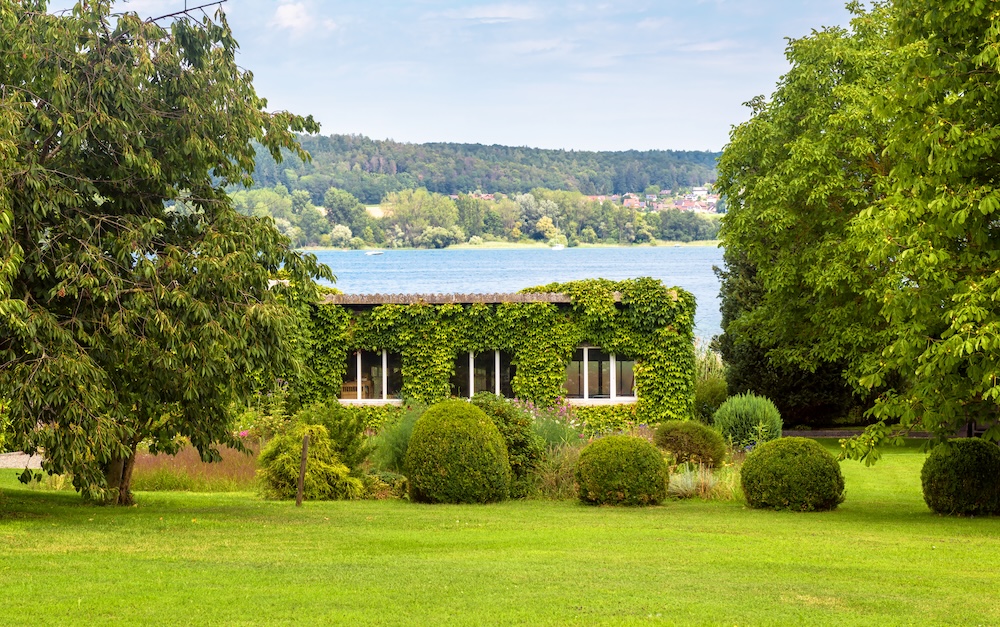
For owners of high-end residences, the challenge is not simply to purchase a home insurance policy.
The real objective is to properly structure the protection of the entire residential estate.
At IFO Global, the analysis of a property never focuses solely on the main building.
Our work typically involves several steps:
• a comprehensive mapping of the real estate assets
• identification of significant outdoor installations
• assessment of real reconstruction values
• review of existing contractual limits
This process often reveals significant underinsurance gaps, particularly regarding outdoor features.
In certain cases, we implement:
• specific guarantees for landscaped gardens
• extensions for aquatic installations
• tailored coverage for outdoor artworks
• dedicated policies for luxury outbuildings
The objective is not to add unnecessary guarantees, but to correct the blind spots that frequently appear in standard policies.
For luxury property owners, several key questions deserve careful attention:
• Is the swimming pool insured for its true reconstruction value?
• Are landscaped gardens covered in the event of natural disasters?
• Is the pool house recognized as an insured structure?
• Have outdoor artworks been properly declared?
• Are compensation limits consistent with the real value of the estate?
In our experience, most traditional home insurance policies do not fully address these issues.
In high-end properties, the value of an estate goes far beyond the walls of the main residence.
Swimming pools, landscaped gardens, outdoor sculptures, outbuildings and outdoor living spaces now represent a significant part of residential wealth.
Yet these elements remain frequent blind spots in traditional home insurance policies.
A detailed review of coverage structures often reveals discrepancies between the real value of outdoor installations and the guarantees included in the policy.
For owners of luxury properties, the real challenge is therefore not simply to have home insurance, but to ensure that the entire estate — both inside and outside — benefits from coherent and appropriate protection.
In this context, the guidance of a broker specialized in complex high-value risks can prove invaluable.
At IFO Global, we regularly assist owners of exceptional properties in reviewing and structuring their insurance coverage, ensuring that every component of their estate — visible or discreet — receives the level of protection it truly deserves.